The Spa Voice: How Sound Healers Guide a Room
Updated September 29, 2026
The spa voice is the soft, slow, gentle speaking voice that sound healers use to guide people into rest. In a sound bath, it's the first instrument your guests hear, before any bowl, and it sets the tone for the whole hour. This guide is for sound healers, yoga teachers and wellness practitioners who lead groups.
Your voice is an instrument. Tune it before you play anything else.
What is the spa voice?
The spa voice is a softer, slower, gentler way of speaking that helps people settle. It's the voice you hear from a good massage therapist or esthetician before a treatment begins.
It has a few simple qualities:
- Softer. Lower volume than everyday conversation.
- Slower. Fewer words per minute, with room to breathe between phrases.
- Gentler. A warm, even tone, with no rush or edge to it.
- Simpler. Fewer words, and fewer jokes.
I learned it in spas. I've spent two decades in the healing arts, including managing spas and working as a licensed esthetician and an Ayurvedic Panchakarma technician. In every one of those roles, I saw the same thing. The tone and volume of your voice make a huge difference in the service. Speaking softer and slower helps people relax more quickly and feel okay being there.
Why does your voice matter in a sound bath?
Your voice matters because it's the first thing your guests hear, and they usually arrive far from rested. A calm voice gives them a signal that it's time to slow down.
Most people come in still buzzing from the day. They're rushed and busy, and they've just been driving in traffic. You can't expect them to drop all of that the moment they lie down. Your voice helps bridge the gap.
Here's what I do. When people first arrive, I often match their energy a little, so the greeting feels natural. Then, as we talk, I shift into a quieter, slower, gentler voice. I can literally watch people start to melt. Their shoulders drop, and they shake off the nerves of getting to the room.
This matters even more once the instruments start. In a yoga nidra sound bath, I talk over soft singing bowls, so my voice and the bowls have to work together, not compete.
How do you pace and pitch spoken guidance?
Start close to where your guests are, then slow down in steps. Here's the progression I use:
- Greet at a normal level. Match the room's energy a little, so no one feels jolted.
- Lower the volume gradually as you explain what's about to happen.
- Slow the pace. Leave pauses between phrases. Silence gives people time to follow.
- Keep the tone even. Warm and steady, not sing-song and not a whisper.
- Speak just above the bowls. Once the sound starts, your voice should sit on top of it gently, not over it.
The mistake I hear most: a loud exit
The most common mistake I hear, from new facilitators and experienced ones, is skipping a gentle guide out. I've been a participant in sound baths where the instruments were beautiful and I was deep in savasana. Then, suddenly, the facilitator said, "All right, let's come back," in a normal, full-volume voice. There was no gentle re-entry at all.
The fix is to reverse your opening. Start the guide out very low and soft, then work your way up to full volume slowly. Give people time to wiggle their fingers, roll to one side and sit up before you speak normally again.
When should you stay silent?
Stay silent when the sound is doing the work. Near the end of my sessions, my voice drops away completely, and I leave time for just the bowls and chimes.
Silence also applies to your body. The voice isn't the only sound you make in the room. I often hear facilitators who are loud without speaking at all:
- Shifting and rustling while people are settling
- Sighing loudly as they sit down
- Dropping into their seat without care
- Moving around the room with no intention in their movements
Every movement is part of the room's sound. Move slowly and deliberately, the same way you'd speak.
How can you practice the spa voice?
Check your voice every time you start speaking. After years in the wellness industry, it's a habit for me, but it began as a conscious check.
As soon as I start talking, I ask myself three questions:
- Am I talking too fast?
- Am I talking too loud?
- Am I making too many jokes?
If the answer to any of them is yes, I adjust right away. A quick laugh can help people relax when they arrive, but once the session begins, humor pulls attention back into the busy mind.
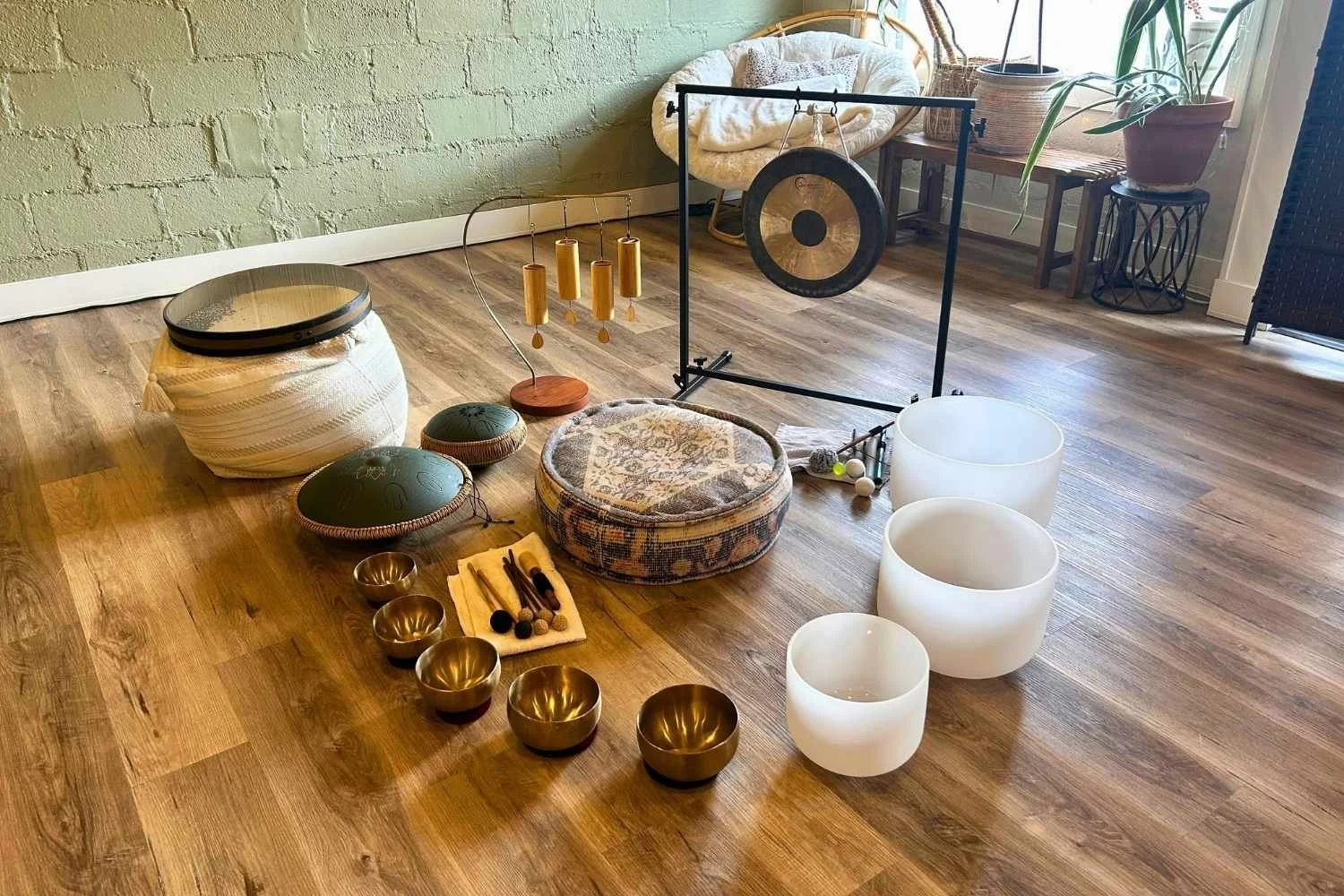
The bigger shift is mental. Think of your voice as an instrument, and the first one your guests will hear. You wouldn't open a session with a big, loud strike on the gong. Don't open with a loud voice either.
If you want to go further, record yourself guiding a two-minute opening and listen back. Notice where you speed up, get louder or fill a pause you could have left empty.
Can you book a sound bath for your practitioner group?
Yes. Yoga studios, wellness businesses and practitioner groups can book a private group sound bath, at your studio or in the Very Well KC studio. It's a chance for your team to experience guided rest from the other side of the mat.
| Group size | Price |
|---|---|
| 1–4 people | $275 |
| 5–10 people | $450 |
| 11–20 people | $675 |
| 21–40 people | $900 |
Sessions run 60–75 minutes and include all instruments, setup and pack-out. Travel is included within 20 miles of Overland Park. You can book a sound bath for your group and choose the date. To hear the spa voice in action first, join the weekly open session on a Wednesday.
Joann Schermerhorn is an ISTA Certified Therapeutic Sound Practitioner and a Sound Healing Arts Facilitator and Educator (200 hours, The Sound Medicine Academy). You can read more about Joann's training.